
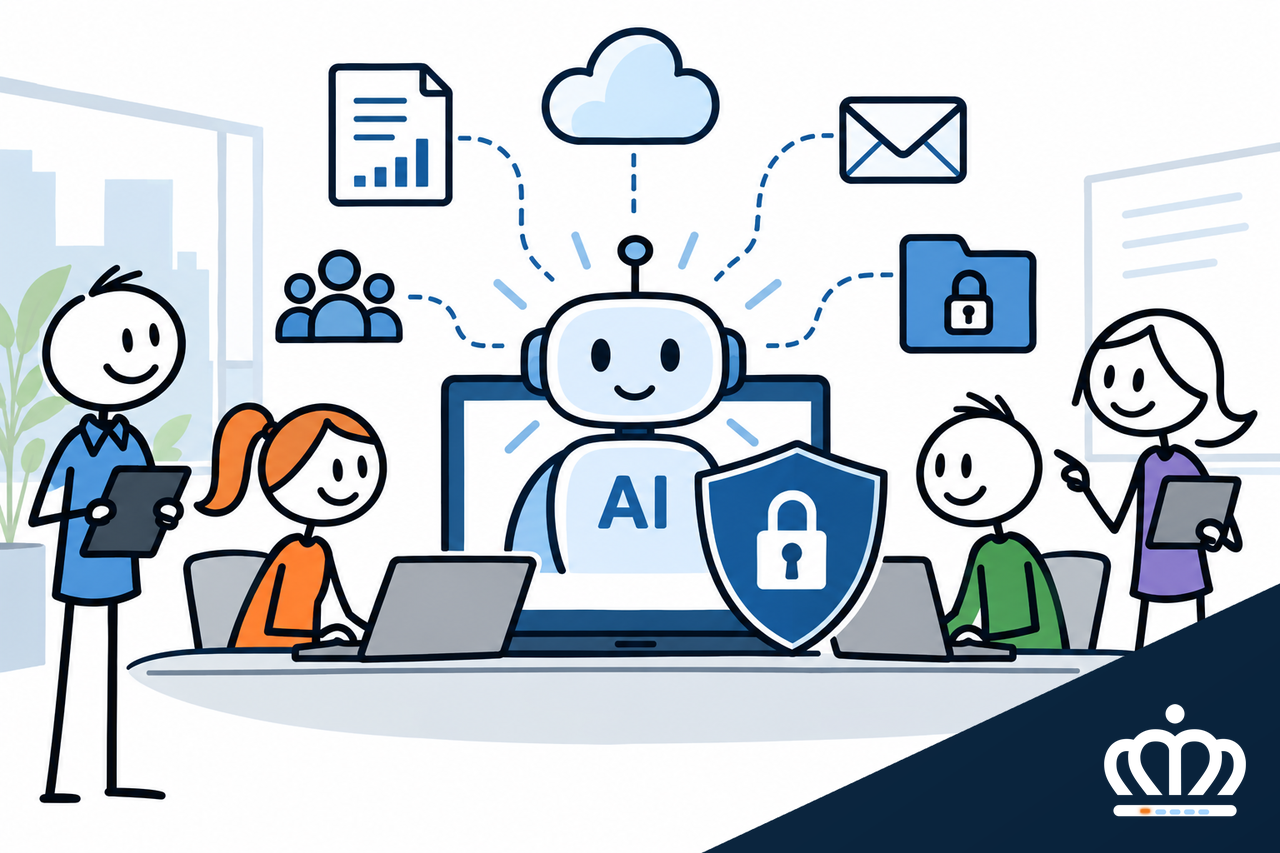
Your Employees Are Using AI. Is Your Business Protected?
Why AI Security Management Is Essential for Modern Businesses
Artificial intelligence is rapidly changing how businesses operate. From drafting emails and analyzing spreadsheets to preparing proposals, researching information, and automating routine tasks, tools like ChatGPT, Microsoft Copilot, and other AI platforms are helping employees accomplish more in less time.
But while businesses are eager to embrace AI’s productivity benefits, many are overlooking a critical question:
What happens to your company’s confidential information when employees start sharing it with artificial intelligence?
The answer depends heavily on which AI tools are being used, how those tools are configured, and what security policies your organization has in place.
At Charlotte Networks, we believe businesses shouldn’t have to choose between productivity and security. With proper AI security management, organizations can take advantage of artificial intelligence while establishing guardrails that help protect sensitive company information, customer data, and internal systems.
The Hidden Security Risks of Employee AI Use
One of the biggest challenges facing businesses today isn’t necessarily that employees are using AI. It’s that they’re often using it without established security policies or oversight.
Consider a few everyday scenarios:
An employee uploads a customer spreadsheet into a public AI chatbot to analyze sales trends.
A human resources manager asks AI to summarize a document containing employee compensation information.
A salesperson pastes confidential pricing, contracts, or proposals into an AI tool to improve a presentation.
An accounting employee uploads financial reports to generate a quick summary.
A staff member connects an AI application to company email, cloud storage, or internal documents without IT approval.
In each situation, an employee may simply be trying to work more efficiently. However, depending on the platform, account type, privacy settings, and connected applications, sensitive business information could be exposed, retained, shared with an external service, or made accessible in unintended ways.
The risk isn’t always the AI itself. The risk is allowing AI to interact with company information without knowing exactly what it can access, where that information goes, and who controls it.

What Is Shadow AI, and Why Should Businesses Care?
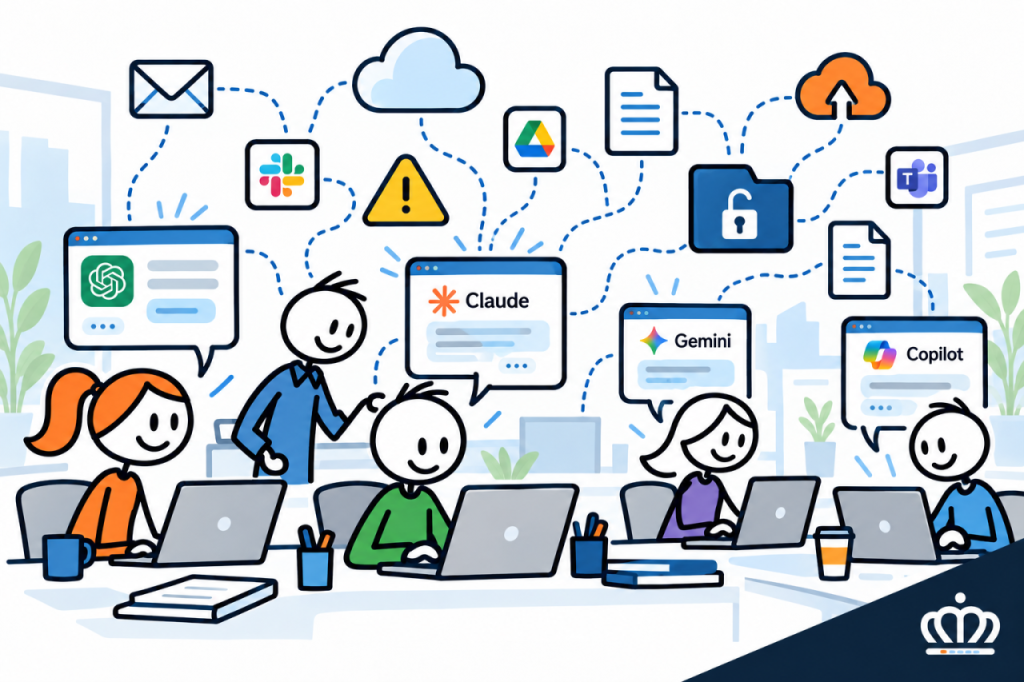
Many business owners are familiar with shadow IT: technology that employees introduce into the workplace without the knowledge or approval of their IT department.
Shadow AI is the newest version of that problem.
Employees may create personal AI accounts, install browser extensions, subscribe to AI productivity services, or connect third-party tools to company resources without realizing the potential security implications.
Even organizations with strong firewalls, antivirus protection, and Microsoft 365 security configurations can face new risks when employees independently introduce AI services.
Without centralized AI management, businesses may have little visibility into:
Which AI applications employees are using.
Whether company information is being submitted to outside services.
What data AI tools are permitted to store or process.
Which AI applications have access to Microsoft 365, email, or cloud files.
Whether AI-generated content is being reviewed for accuracy.
Whether employees are following appropriate privacy and security practices.
Simply telling employees to “be careful with AI” is not an adequate security strategy.
Businesses need technical controls, clear policies, and ongoing oversight.
AI Guardrails: Protecting Your Business Without Restricting Productivity
AI guardrails are the policies, technical configurations, permissions, and monitoring practices that help keep artificial intelligence operating within acceptable boundaries.
Think of them as the security rules that determine what your employees’ AI tools are allowed to access, what information can be shared, and how those tools interact with your company’s systems.
Properly implemented AI guardrails can help businesses:
1. Protect confidential business information
Sensitive customer records, financial documents, employee information, passwords, proprietary processes, and other confidential materials should not be freely accessible to every AI application.
Data classification, access restrictions, and data loss prevention policies can help reduce accidental disclosure.
2. Control which AI applications employees can use
Not every AI platform offers the same privacy, security, or administrative features.
Businesses should evaluate and approve AI tools based on their security capabilities, data handling practices, and suitability for business use.
3. Secure AI access to Microsoft 365
Microsoft 365 Copilot and connected AI tools can interact with business documents, email, meetings, and other information.
That makes proper Microsoft 365 permissions especially important.
For example, Microsoft 365 Copilot generally respects existing user permissions. However, if employees already have excessive access to confidential SharePoint or OneDrive documents, Copilot may make that information easier to discover.
AI security therefore starts with correctly securing your existing environment.
4. Reduce accidental data exposure
Depending on the platform and available licensing, organizations can implement data loss prevention rules, sensitivity labels, restricted sharing, and other controls to limit the information AI tools can process.
5. Maintain visibility and accountability
Appropriate auditing, reporting, and monitoring can help administrators identify risky activity, review policy compliance, and investigate potential information exposure.
6. Establish safe and consistent employee practices
Employees need to understand which AI tools are approved, what information they may share, and when AI-generated work requires human verification.
AI security works best when technical safeguards are supported by clear employee guidance.
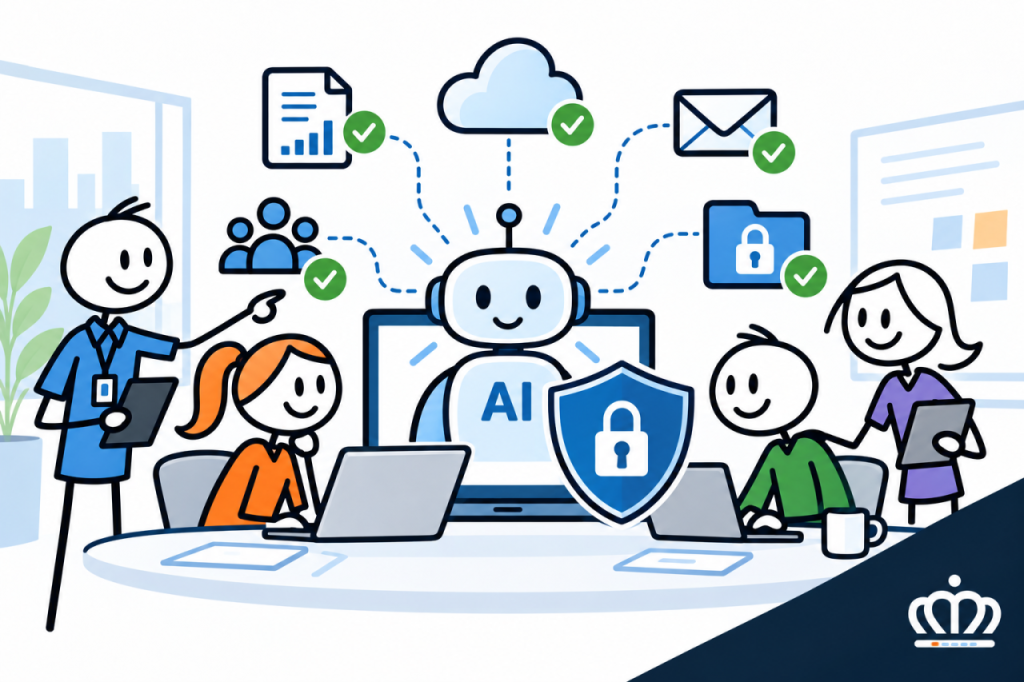
How Charlotte Networks Helps Businesses Secure Their AI Environments
At Charlotte Networks, our approach to AI security is straightforward:
We help businesses use artificial intelligence productively while configuring their technology environments to be as secure as reasonably possible.
Rather than simply allowing employees to adopt AI tools on their own, we help organizations establish a managed, security-focused approach to AI adoption.
Our AI security management services can include:
AI Security Assessments
We evaluate how your organization uses AI, which platforms employees rely on, and where sensitive company information may be at risk.
This helps identify security gaps before they turn into larger problems.
Secure AI Configuration
We help configure supported business AI platforms and their administrative settings with security and privacy in mind.
Depending on the platform, this may include reviewing data-sharing options, access permissions, connected applications, account security, and available data protection controls.
Microsoft 365 and Copilot Security
For businesses using Microsoft 365, we can review and configure relevant Microsoft 365 security controls, including SharePoint and OneDrive permissions, identity protections, sharing restrictions, and applicable Microsoft Purview features.
Properly securing the Microsoft 365 environment helps establish a safer foundation for Copilot adoption.
AI Access and Application Controls
We help businesses determine which AI tools should be approved, which employees should have access, and what restrictions may be appropriate.
Where supported, we can assist with centralized administrative controls, identity management, and restrictions on unapproved integrations.
Data Protection and AI Guardrails
We help implement available technical safeguards designed to reduce inappropriate access to company data and accidental disclosure.
These may include sensitivity labels, data loss prevention policies, access restrictions, and other security controls supported by your technology environment.
Employee AI Security Policies
Technology alone cannot eliminate every risk.
Charlotte Networks can help businesses establish practical AI usage guidelines so employees understand how to use approved tools responsibly without unnecessarily exposing customer or company information.
Ongoing AI Security Management
AI tools and their security capabilities continue to evolve.
As new applications, integrations, and features become available, businesses should periodically reevaluate their AI configurations, access controls, and security policies.
Charlotte Networks can help organizations maintain and improve their AI security posture as their needs change.
The specific safeguards available depend on the AI platforms, licensing, and systems your business uses. No configuration can completely eliminate AI-related risk.
Why Small and Medium-Sized Businesses Are Especially Vulnerable
Large enterprises often have dedicated security teams, compliance departments, and technology governance programs.
Smaller businesses typically don’t.
A 15-person accounting office, 30-person construction company, or 50-person professional services firm may already have employees using multiple AI applications without any formal security review.
These businesses still handle sensitive customer records, financial information, contracts, and internal communications.
And a security incident involving that information can create significant financial, operational, and reputational consequences.
Your company doesn’t need to be large to need AI security management. It only needs to have information worth protecting.
For small and medium-sized businesses, working with a managed IT provider can provide access to security expertise without the expense of building an internal AI security team.
AI Security Isn’t About Saying No to AI
Artificial intelligence offers substantial opportunities for businesses to improve efficiency, reduce repetitive work, and make better use of their information.
Prohibiting AI entirely isn’t necessarily practical, particularly when employees already have access to it on personal accounts and devices.
A more effective strategy is to establish an approved, properly configured environment where employees can benefit from AI without unnecessarily exposing sensitive information.
That means adopting AI deliberately rather than allowing it to spread throughout the organization unmanaged.
Businesses should know:
Which AI platforms are authorized.
What company information those platforms can access.
How sensitive information is protected.
What employees are permitted to share.
Who manages AI security settings and permissions.
How AI usage and associated risks are reviewed.
The goal is not to eliminate every possible risk. It is to understand, manage, and reduce those risks while preserving the advantages that make AI valuable.
Before You Give Employees Access to AI, Secure It
If your company is planning to introduce ChatGPT, Microsoft Copilot, or other AI-powered business tools, security should be part of the conversation from the beginning.
And if your employees are already using AI, now is the time to determine whether the appropriate protections are in place.
Charlotte Networks helps businesses throughout the Charlotte, North Carolina, and York, South Carolina, areas implement secure, practical AI solutions with properly configured guardrails, access controls, and data protection measures.
We help companies embrace new technology without overlooking the security fundamentals that protect their business.
Let Charlotte Networks Help Secure Your Business’s AI
Whether your company is just beginning to explore AI or already has employees using it daily, Charlotte Networks can help evaluate your environment, identify potential risks, and configure the safeguards appropriate for your organization.
Put AI to work for your business — without leaving your business information unnecessarily exposed.
Contact Charlotte Networks to discuss an AI security assessment and a safer approach to business AI adoption.
Charlotte Networks
Managed IT Services | Cybersecurity | AI Security Management
Serving Charlotte, NC, York, SC, and surrounding communities.
Website: https://charlottenetworks.com